Size: 90-120cm (occasionally up to 150cm)
Status: Native / Legally protected
Venom: Non-venomous
Class: Reptile
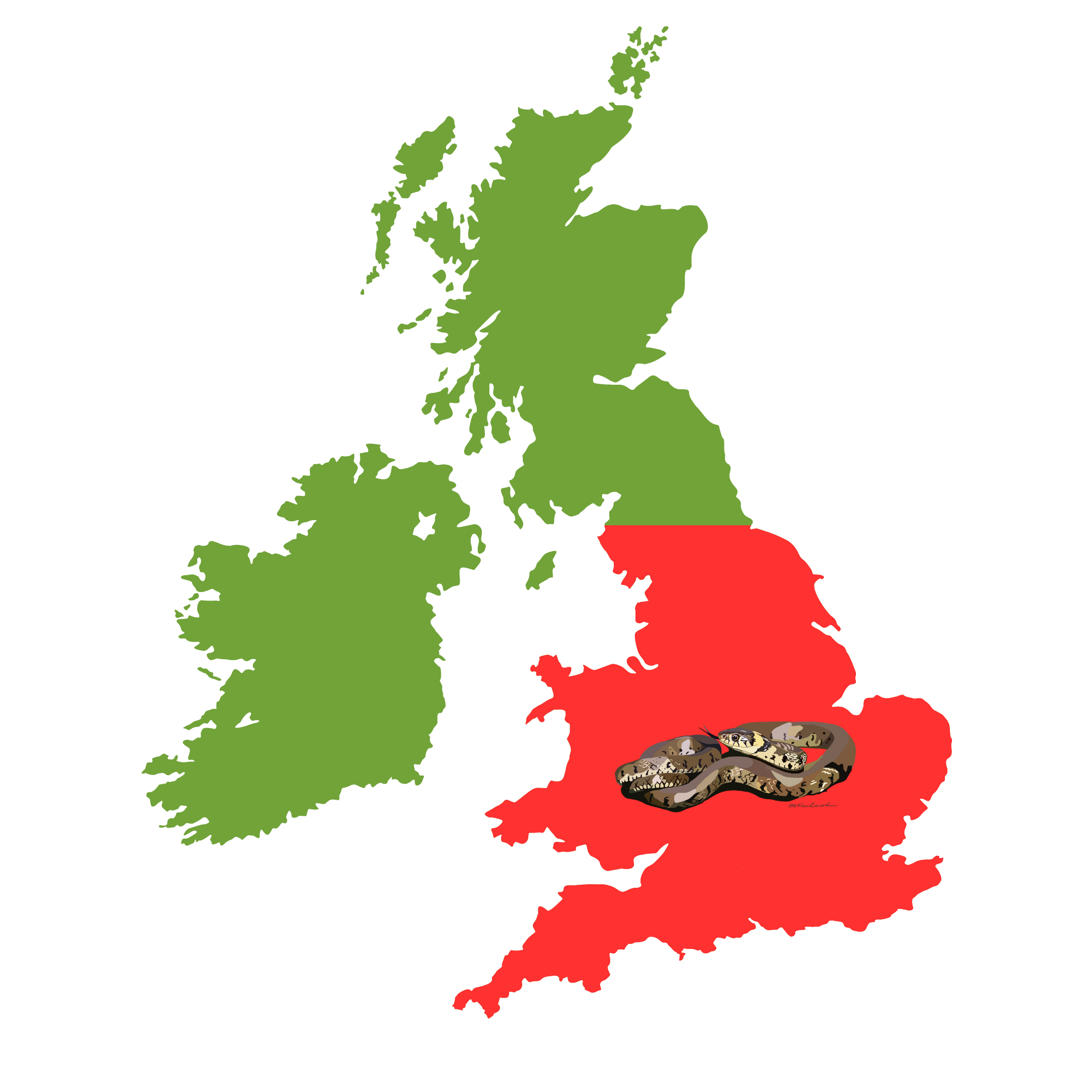
UK Population: ~ 320,000
Life span: up to 25 years
Have you ever spotted a snake slithering through the long grass or swimming across a pond? Then you might have been lucky enough to encounter the Grass Snake, Britain’s largest native snake! Despite their impressive size, these fascinating reptiles are completely harmless to humans and have some incredible tricks for surviving in the wild. Watch the full video on Grass Snakes here!
Did you know?
Grass Snakes use nature’s own heaters to help hatch their eggs. Unlike birds, Grass Snakes don’t sit on their eggs to keep them warm. Instead, females lay their eggs in places like compost heaps, manure piles and rotting vegetation. As the organic material breaks down, it releases heat, creating a natural incubator for the developing snakes. After several weeks, the young snakes hatch and are ready to explore the world on their own!
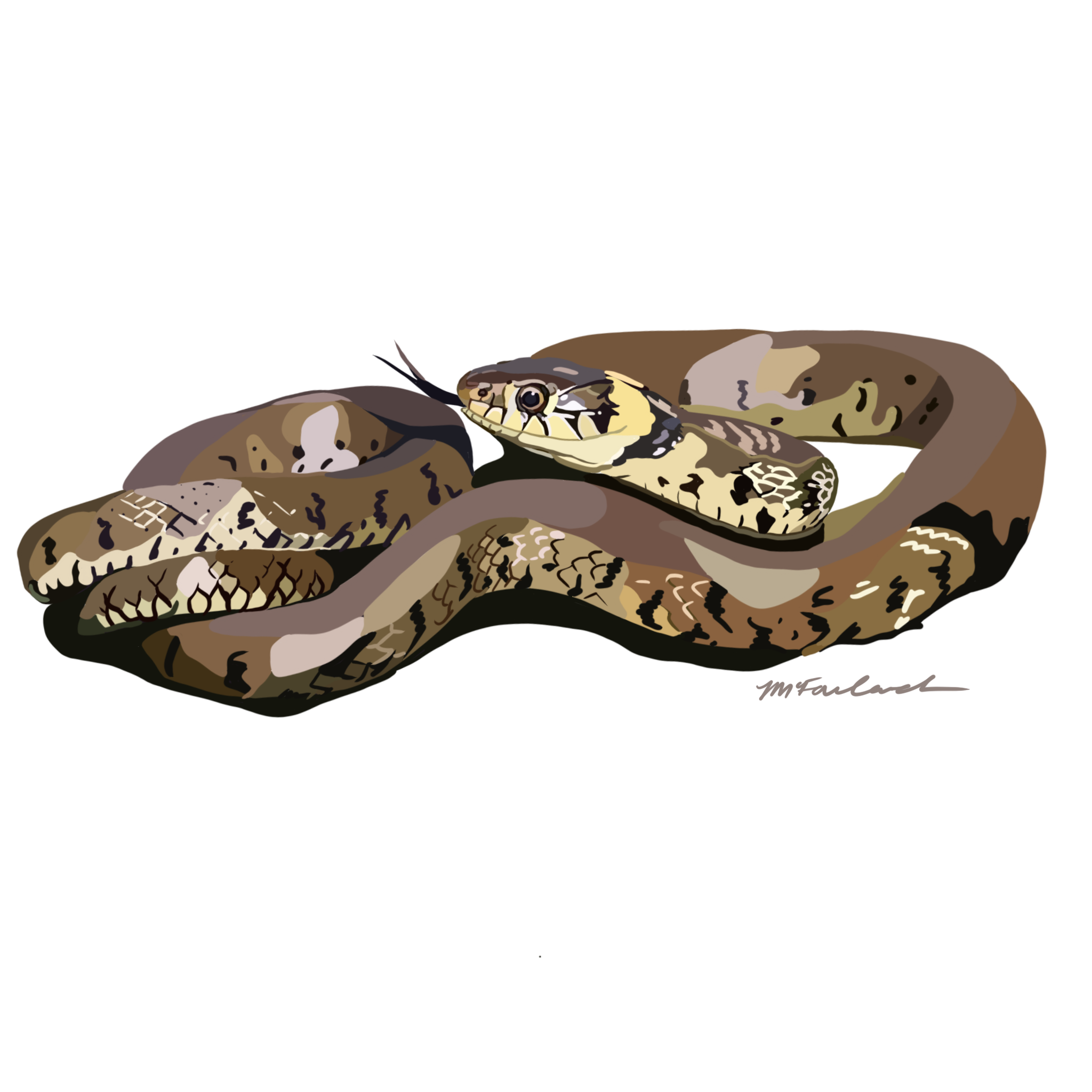
The Grass Snake, also known as the Barred Grass Snake, is Britain’s largest native snake, but there’s much more to this remarkable reptile than its impressive size!
Grass Snakes are usually olive-green or a greyish-green, with darker markings along their bodies. One of their most distinctive features is the yellowish or cream-coloured collar behind their heads, bordered by black markings. This makes them easier to distinguish from Britain’s other native snakes.
Although Grass Snakes are often associated with water, they can be found in a variety of habitats, including grasslands, wetlands, heathlands, gardens and woodland edges. They particularly favour areas with ponds, marshes or other freshwater habitats nearby, where they can find food and shelter.
Like other reptiles, Grass Snakes are ectothermic, meaning they rely on external sources of heat to regulate their body temperature. You might spot one basking in a sunny patch of grass or on a warm bank before disappearing into the vegetation.

Did you know?
Grass Snakes can stay underwater for surprisingly long periods! Although they breathe air using lungs, Grass Snakes are strong swimmers and can remain submerged for up to 30 minutes! A useful ability to hunt underwater or escape predators…
Grass Snakes might look initimidating, but they’re mostly harmless, unless you happen to be an amphibian. Frogs and toads make up an important part of their diet, although they also feed on newts, small fish and occasionally other small animals.
They often hunt around ponds and wetlands, using their keen senses to locate prey. Grass Snakes can detect movement through vibrations in the ground, while their forked tongues collect chemical information from their surroundings, helping them investigate potential food sources.
But Grass Snakes aren’t at the top of their food web! They can also become prey for larger animals like birds of prey, badgers and foxes. Young Grass Snakes are particularly vulnerable to predators because of their small size.
Although Grass Snakes are often associated with water, they can be found in a variety of habitats, including grasslands, wetlands, heathlands, gardens and woodland edges. They particularly favour areas with ponds, marshes or other freshwater habitats nearby, where they can find food and shelter.
Like other reptiles, Grass Snakes are ectothermic, meaning they rely on external sources of heat to regulate their body temperature. You might spot one basking in a sunny patch of grass or on a warm bank before disappearing into the vegetation.
Grass Snakes face a number of threats, including habitat loss, road traffic and the destruction of suitable breeding sites. They are also sometimes harmed by people who think they’re dangerous.
But there’s plenty you can do to help!
- Creating ponds, however small, in our gardens and green spaces provides a home for their preferred food.
- Allowing long grass to grow and providing sheltered places like log piles and rockeries to bask can make green spaces more welcoming for Grass Snakes.
- Create and leave an undisturbed compost heap to provide a valuable egg-laying site, as the warmth produced by decomposing material helps incubate their eggs.